

EAIE 2026: T4EU Voices in Higher Education
Key takeaways from EAIE 2026 in Glasgow
About
The Transform4Europe (T4EU) alliance recently participated in the EAIE 2026 Conference in Glasgow, Scotland, Europe’s largest international higher education event. As one of 36 European University Alliances present, the T4EU delegation showcased its collaborative vision for the future of higher education. The following are reflections and key takeaways from some of the delegates who represented the alliance, sharing their insights on the themes of the rhythm of revolution, the evolving role of university alliances, and the future challenges and opportunities for the sector.
Voices
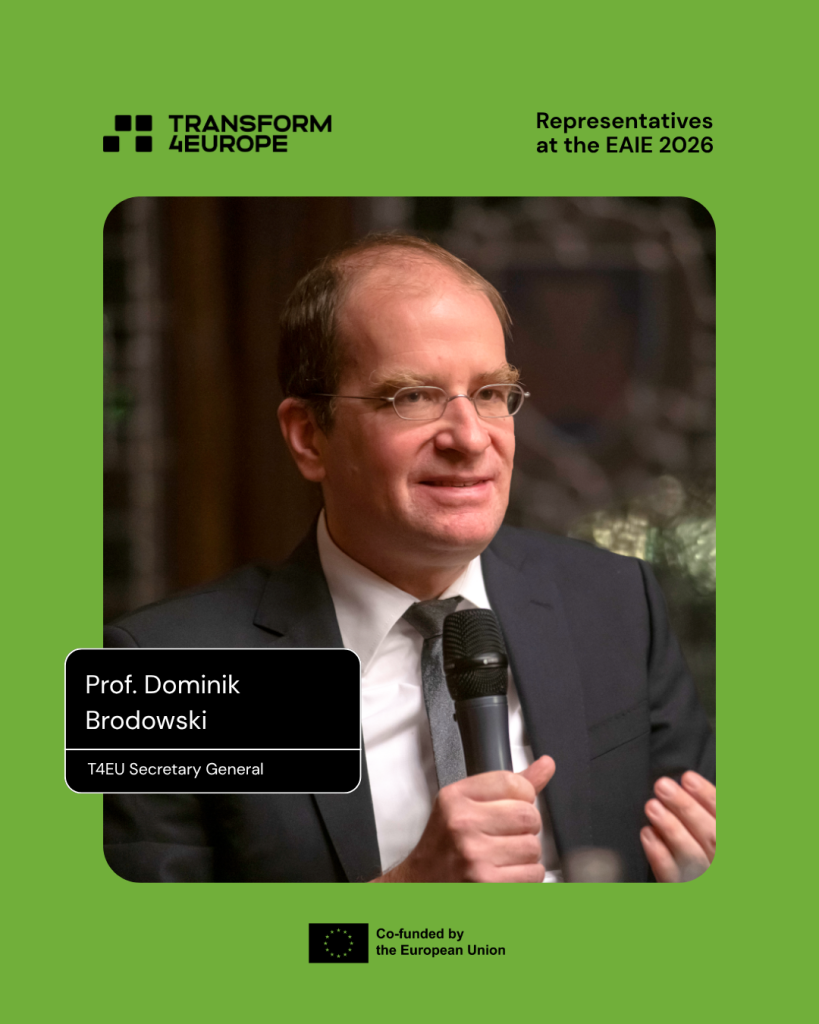
Prof. Dominik Brodowski
T4EU Secretary General
EAIE 2026 marks an important milestone for Transform4Europe. After four participations, we are no longer presenting the potential of a European University Alliance but demonstrating its transformative impact. As an increasingly integrated European campus, T4EU shows how joint education, research, innovation, and regional engagement are already creating tangible value across Europe.
Show full comment >>
EAIE 2026 marks a new stage in the evolution of our Alliance. When we first participated in EAIE, our focus was on building partnerships and shaping a shared vision. Today, we can demonstrate concrete, transformative achievements.
Over the past years, the eleven Transform4Europe partner universities have developed structures and opportunities that make the idea of an integrated European campus tangible. Students collaborate in international challenge-based learning formats, researchers create knowledge within established transnational networks, and initiatives such as BIKE-HEI, LETSGROW, and WISE connect universities with industry, public institutions, and regional ecosystems. Through our concept of ‘European Knowledge Entrepreneurs’, we encourage students and researchers to create meaningful innovations and transform knowledge into solutions for societal challenges.
Our presence at EAIE 2026 is an important opportunity to discuss the future of European higher education and to demonstrate the concrete value that European Universities alliances already deliver today. T4EU illustrates how long-term cooperation can move beyond mobility and project-based collaboration towards a shared educational, research, and innovation space. We are here to showcase how our integrated European campus and our T4EU Alliance contribute to strengthening Europe’s capacity for innovation, resilience and transformation.
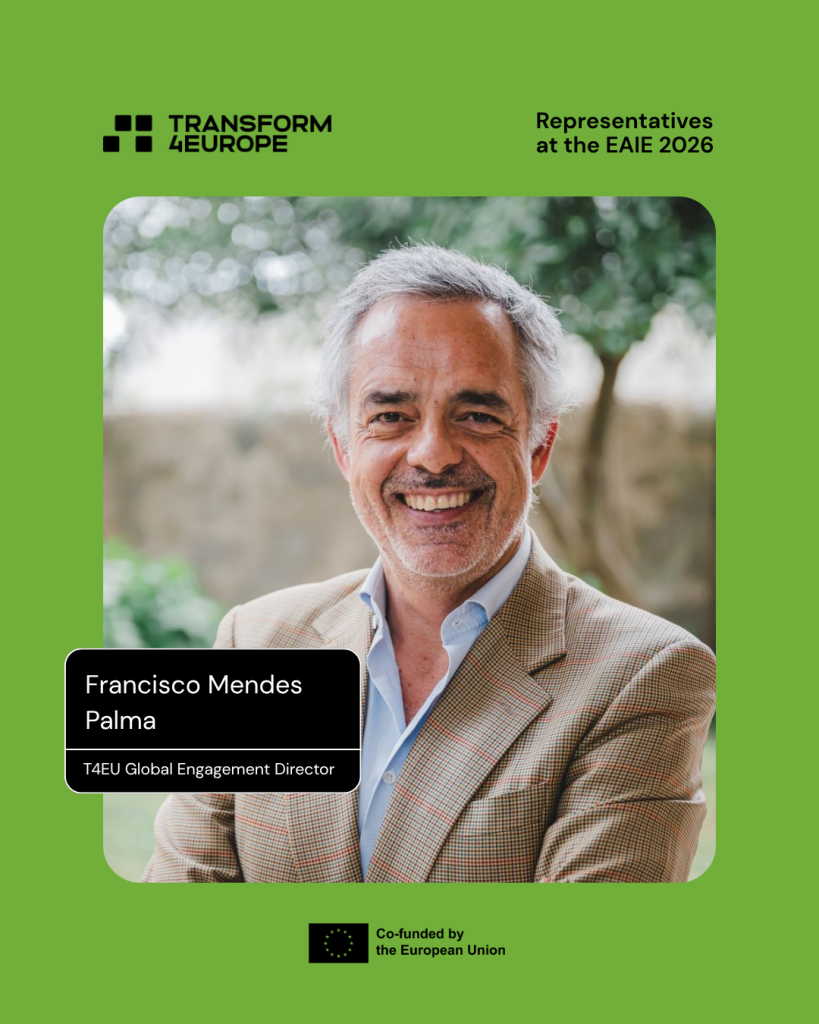
Francisco Mendes-Palma
T4EU Global Engagement Director
We stand for academic freedom. Where we find partners and stakeholders that follow this purpose, we will be there. We will also be there for those that, through partnership with European Universities Alliances, will have the strength to stand for this freedom. As we cannot be everywhere at the same time, regions neighbouring Europe and the Mediterranean, as well as Central and South-East Asia, are our priority.
Show full comment >>
T4EU has a global engagement strategy aiming to impact academic global partners with the tangible assets we develop and keep on doing so in the most innovative way. To reach the relevant players, we must be present in international spaces such as EAIE. Here we will work on opportunities to further develop joint global academic strategies that will provide students, professors, researchers, staff, and stakeholders with an Alliance that aims to be a driving force in higher education activities.
We stand for academic freedom. Where we find partners and stakeholders that follow this purpose, we will be there. We will also be there for those that through partnership with European Universities alliances will have the strength to stand for this freedom.
As we cannot be everywhere at the same time, regions neighbouring Europe and the Mediterranean, as well as Central and South-East Asia, are some of our priorities.
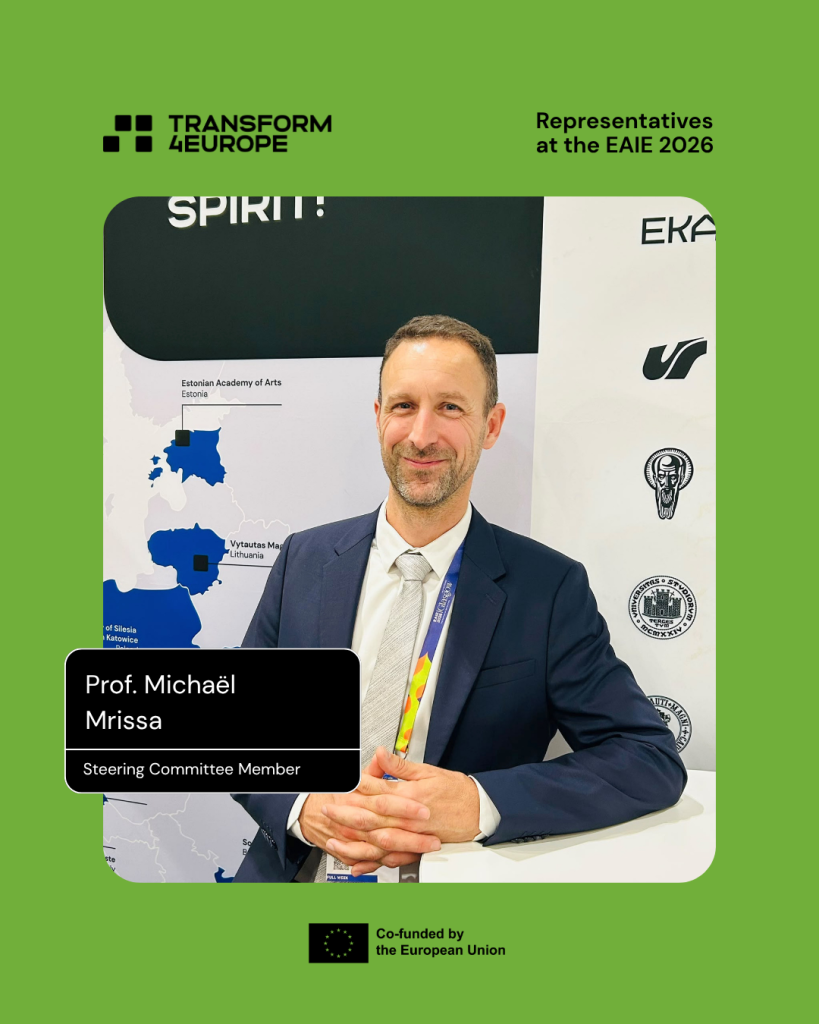
Prof. Michael Mrissa
T4EU Steering Committee member
At T4EU, we have understood that European universities drive a fundamental change that greatly improves the quality of our cooperation, ultimately providing better mobility opportunities to our students and staff. Research shows that an international experience greatly supports self-realisation, and this is where we get our motivation to drive collective action.
Show full comment >>
At T4EU, we have understood that European universities drive a fundamental change that greatly improves the quality of our cooperation, ultimately providing better mobility opportunities to our students and staff. Research shows that an international experience greatly supports self-realisation, and this is where we get our motivation, making it easier to develop collective action.
From this meaningful understanding, we are engaged to work together and overcome our administrative and legal challenges. We believe that the development of a legal framework is key to sustaining long-term operation, and at the same time, strong academic bonds are crucial so that our interactions go beyond purely institutional measures, to create an environment of trust, respect and open communication that allows for greater achievements to become real.
Finally, as time goes by, we see our first results bear fruit, and this testimony of our contribution to improving education around us brings great satisfaction.
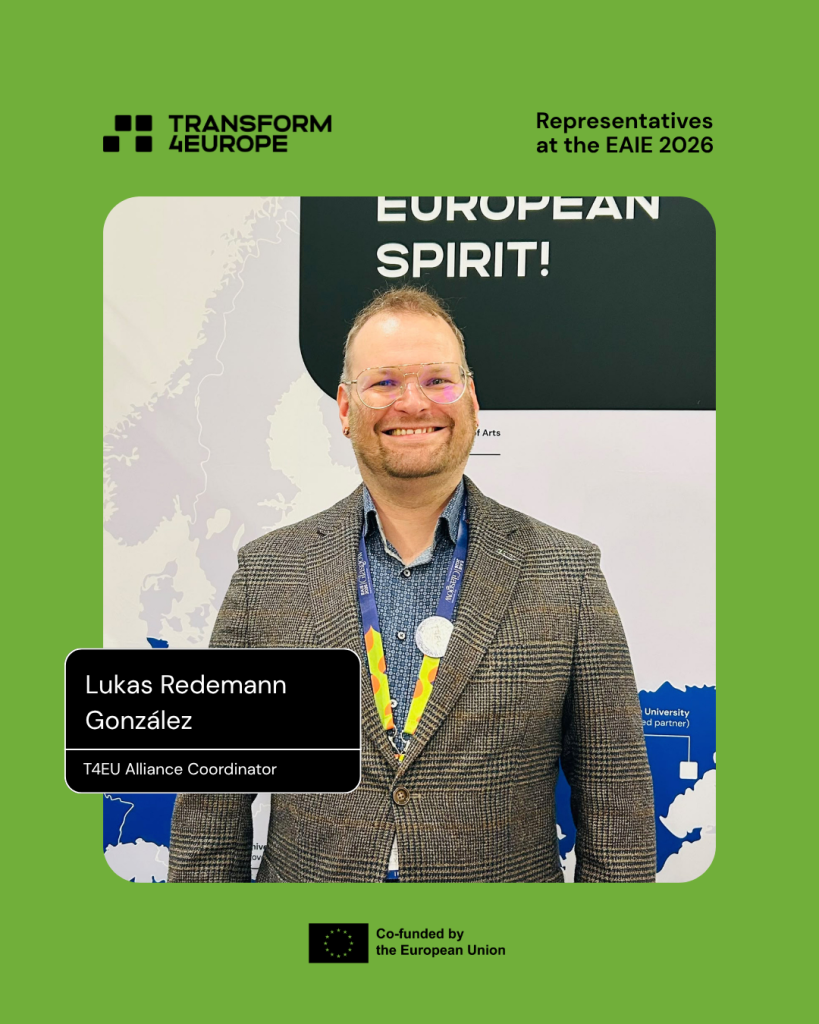
Lukas Redemann González
T4EU Alliance Coordinator
T4EU empowers knowledge entrepreneurs by connecting learning, collaboration, and real-world challenges. Staff members develop new skills through the T4EU Professional Development Programme, while students gain experience through T4EU Weeks, Summer Schools, Stakeholder Challenges, and Student Competitions – turning knowledge into ideas, solutions, and impact for Europe.
Show full comment >>
T4EU empowers academic staff and students to become active knowledge-entrepreneurs by creating opportunities to learn, collaborate across borders and turn knowledge into tangible solutions for Europe’s societal challenges.
For academic staff, the T4EU Professional Development Programme provides opportunities to strengthen their skills, exchange practices across the Alliance and develop new approaches to teaching, innovation and collaboration. It fosters a culture in which educators are not only knowledge providers, but also facilitators of change and co-creators of solutions.
For students, T4EU creates an international environment in which knowledge can be applied beyond the classroom. T4EU Weeks and Summer Schools bring students from different disciplines and countries together to learn, collaborate and tackle complex challenges from multiple perspectives. Stakeholder Challenges connect students directly with real-world problems and external stakeholders, while Student Competitions encourage them to develop creative ideas, entrepreneurial mindsets and innovative solutions.
Together, these activities build the confidence, skills and networks needed to move from knowledge to action. T4EU therefore sees education not simply as the transfer of knowledge, but as a catalyst for participation, innovation and societal impact – empowering the next generation of Europeans to actively shape the future of Europe.
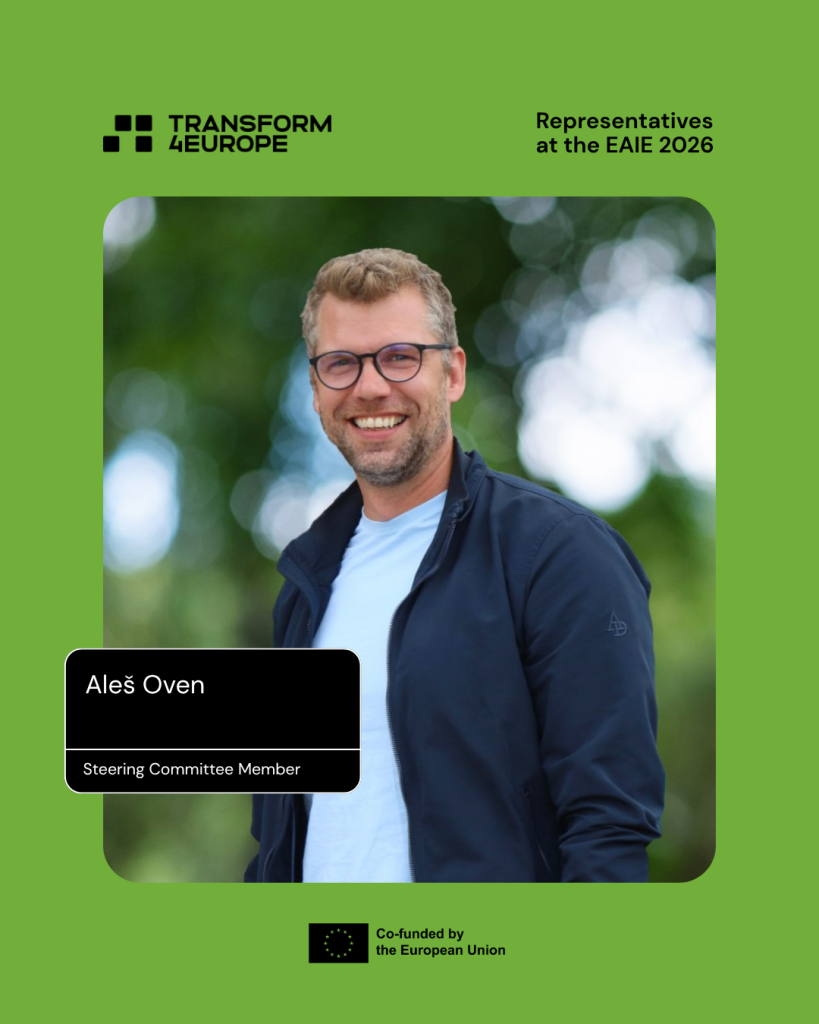
Aleš Oven
T4EU Steering Committee member
Transformation is written in our name, pouring to the very core and every aspect of the Alliance. We’re transforming ourselves as persons, as institutions and trying to have a positive impact on the surrounding community. The transformation is the process by which we are becoming more inclusive, sustainable and interconnected. Therefore, by becoming better selves, we are also directly living our green and inclusive strategies and achieving twin transition on multiple levels.
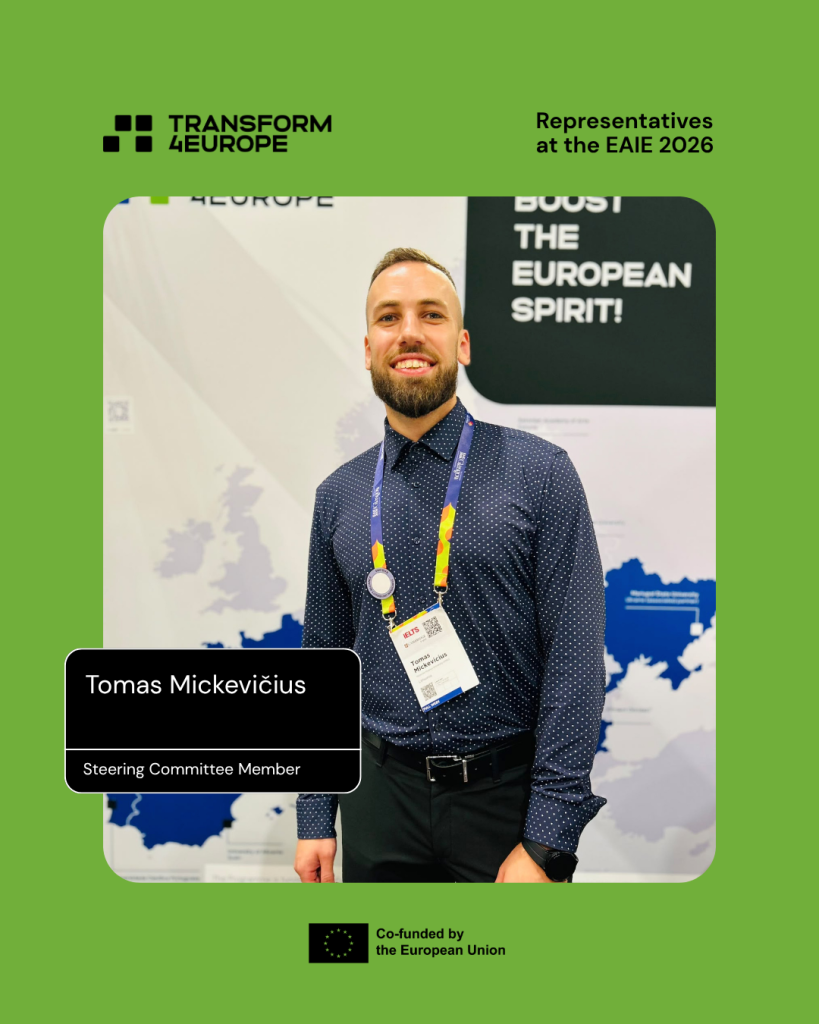
Tomas Mickevičius
T4EU Steering Committee member
Educational revolution is not a single breakthrough but a new rhythm of continuous change. T4EU is helping universities move beyond rigid degree structures towards more flexible, challenge-based and interdisciplinary learning, while giving academic staff new opportunities to collaborate, experiment and teach across institutional boundaries.
Show full comment >>
Educational revolution is not necessarily about sudden disruption. For me, it is about establishing a new rhythm of continuous, purposeful change — one that gradually transforms how universities teach, collaborate and respond to society.
Transform4Europe is contributing to this shift by moving beyond the traditional idea of education as a fixed degree programme delivered within the boundaries of one institution or discipline. Through challenge-based and interdisciplinary learning, shared courses and mobility opportunities, we are creating a more flexible European learning environment where students can engage with real societal challenges and learn across borders.
But this new rhythm is also about academic staff. Transformation cannot happen if we simply ask teachers to adopt new tools or methods. We need to create the conditions for them to experiment, collaborate with colleagues from other universities and disciplines, share innovative teaching practices and develop professionally together.
This is where I see T4EU’s particular value: we are not only designing new educational models; we are building a community capable of sustaining them. The rhythm of revolution is therefore not about moving faster for the sake of speed. It is about creating a steady cadence of experimentation, collaboration and learning — and making that change part of how our universities work every day.
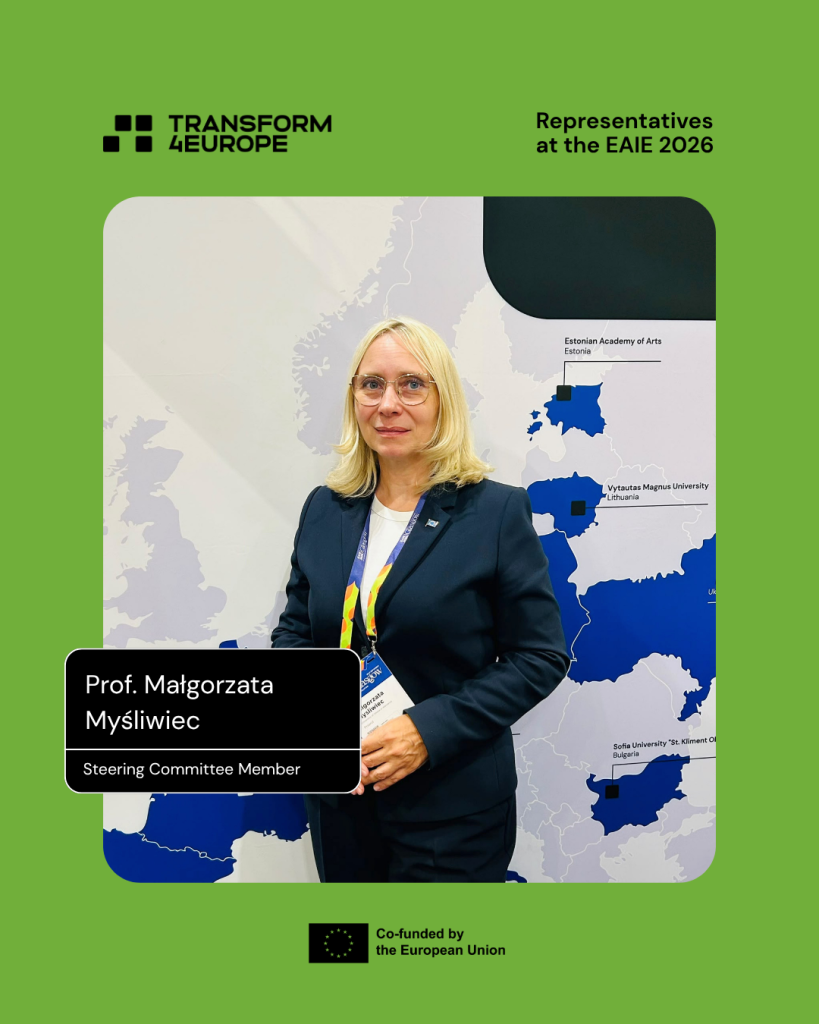
Prof. Małgorzata Myśliwiec
T4EU Steering Committee member
To succeed in this rhythm of change, universities must unlearn operating as isolated ivory towers. We must embrace flexible short-form learning, short-term mobility, and rapid updating of our academic offering. Combining empathy and active dialogue with external stakeholders alongside academic creativity gives us our best chance for success.
Show full comment >>
What should universities unlearn in order to succeed and keep pace with the rhythm of revolution? First and foremost, we must realise that today’s students, doctoral students, and researchers operate in a completely different way to how they did just a few years ago. First and foremost, we must embrace short-form learning programmes. We must recognise that the current demands and our environments are changing rapidly, and we must be able to adapt to them. And so: short-form learning programmes, short-term international mobility schemes, rapid updating of our academic offerings and adapting it to the needs of external stakeholders. What we must also learn is that the university today is not an ivory tower that can exist in isolation, although, of course, that natural curiosity about the world which characterises academics must remain an intrinsic part of it. But the university must actively engage in dialogue with external stakeholders; it must ask them, with empathy, what their needs are and which of the most pressing problems need to be addressed. And it is the combination of these two elements – empathy and the ability to engage in dialogue with the outside world, coupled with academic creativity – that gives us the best chance for success.