
Transform4Europe strengthens ties with international partners at Católica’s T4EU Week
27 May 2026 | Universidade Católica Portuguesa
About
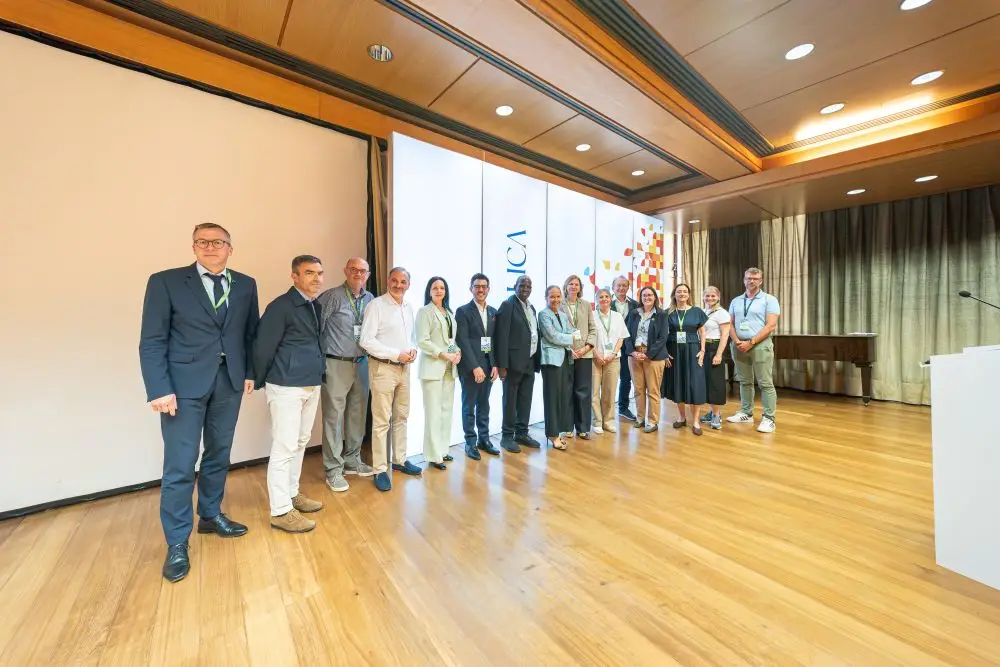
The Global Partnership Forum was one of the highlights of T4EU Week, bringing together representatives from the universities of the Transform4Europe (T4EU) alliance, international partners, lecturers, researchers and students in Lisbon to reflect on the role of universities in building more collaborative communities that are better equipped to face global challenges.
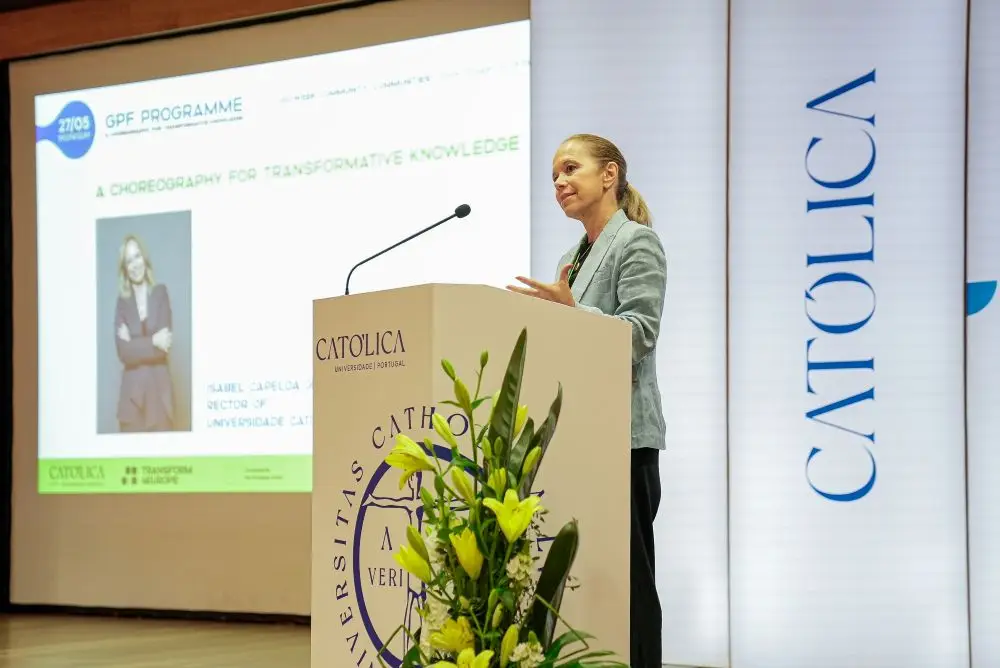
The opening session featured a speech by the President of the Universidade Católica Portuguesa, Isabel Capeloa Gil, who highlighted the importance of international academic cooperation as a transformative force. In her speech, she emphasised the importance of university alliances as shared spaces for knowledge creation, stating that “an alliance is, at its best, a studio on a global scale: a space for shared experimentation, where knowledge is co-created across borders, disciplines and traditions”.
Next to take the stage were Pedro and Miguel Ferreira Pinto, better known as the Iron Brothers. In a more intimate moment, the brothers spoke about their sporting careers, including their participation in triathlons and Iron Man events, marked by resilience and personal achievement.
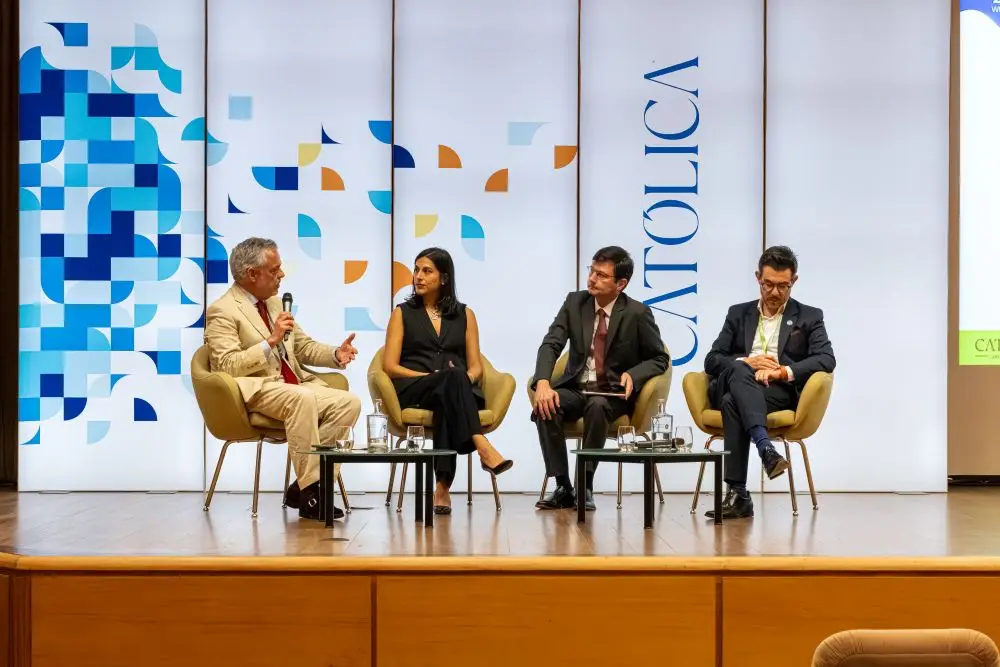
This was followed by a session moderated by Vice-Chancellor Peter Hanenberg entitled “The New European University: Transformation and Legacy in Research”, brought together researchers from various partner institutions, including Henrique Veiga-Fernandes from the Champalimaud Foundation, Sonya Mileva-Bozhanova from Sofia University, Alberto Palavicini from the University of Trieste, Klavdija Kutnar from the University of Primorska and Stéphane Riou from Jean Monet University.
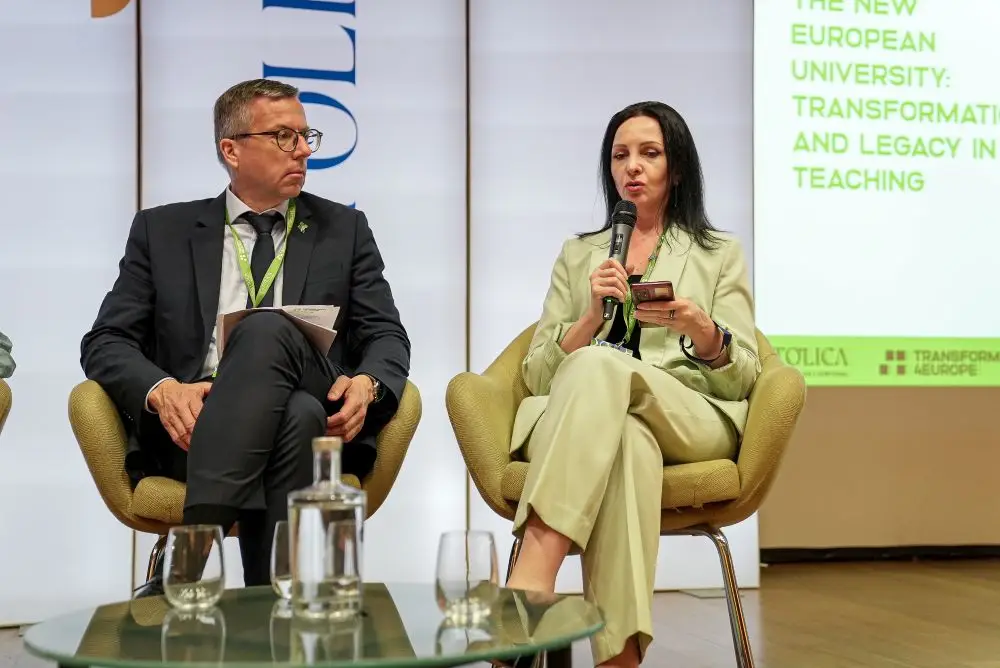
Moderated by the President of the Universidade Católica, this was followed by the roundtable discussion “The New European University: Transformation and Legacy in Teaching”, on the role of university alliances in the European context and in the transformation of teaching. Internationalisation, academic mobility, talent retention, technological innovation in teaching, European funding and the educational dimension of universities were among the topics addressed. “Universities are not merely a collection of buildings constructed to provide a service or produce a product. They are pillars of society,” stated Isabel Capeloa Gil. “By pooling our resources – intellectual, academic and research-based – we can make a strong and profound contribution to the European project,” she emphasised.
The President of the Council of Rectors of Portuguese Universities, Luís Ferreira, echoed this view, emphasising that university alliances represent new institutional models for Europe. “What we are seeking is to build universities that operate locally, learn across borders, share capabilities and prepare students not only for the labour market, but for a fragile, interconnected and democratic Europe,” he argued.
Tetyana Marena, Acting Rector of Mariupol State University in Ukraine, highlighted the importance of belonging to the Transform4Europe alliance. “Although Ukraine is only on its way to the European Union, Mariupol State University is fortunate and proud because, thanks to Transform4Europe, we can experience what it means to be part of a great European family,” she emphasised.
When asked how to be a transformative university, Ludger Santen, President of Saarland University in Germany, highlighted the importance of Cultural Studies. “We are always talking about defence, but also about resilience, and I believe that a large part of this is cultural. We need to prepare for true peace, and this can only last if people understand one another. That is where the cultural sciences are important,” he explained.
Juan L. Lopis, from the University of Alicante, Spain, highlighted the shift from a bilateral context to a multilateral reality, a trend also reflected in university partnerships, noting that these are “perfect tools for sharing best practices and attracting students”.
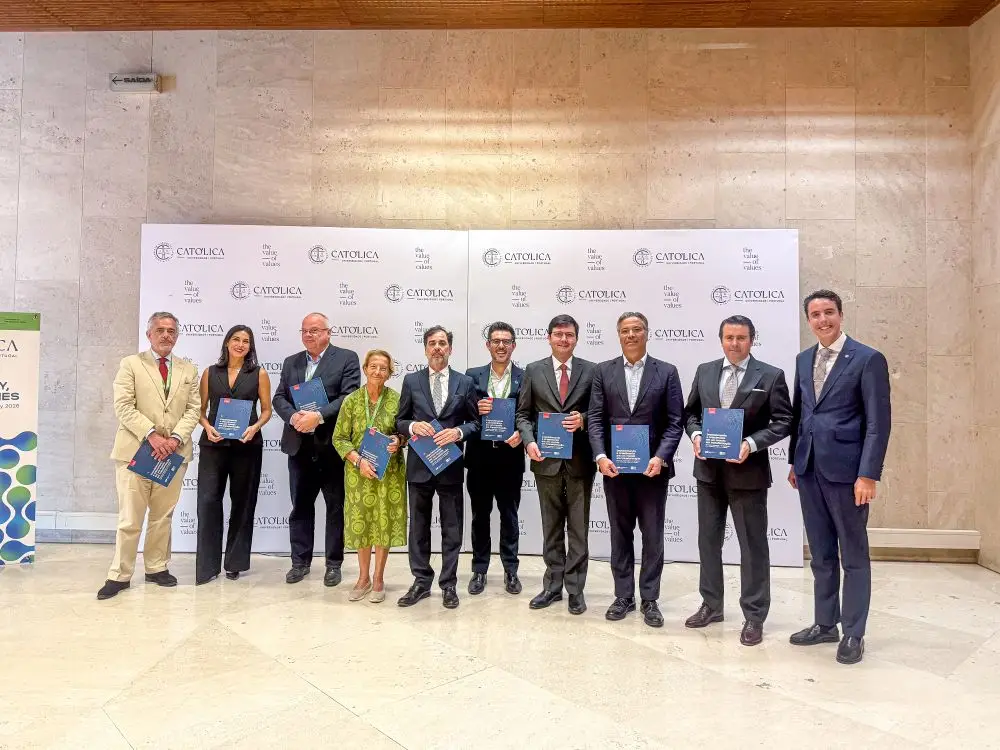
Just before lunch, memoranda of understanding were signed for global academic partnerships with Oregon State University, Moi University, OP Jindal University and São Paulo University.
During the afternoon, the Global Partnership Forum continued the programme with three thematic sessions that encouraged reflection on different perspectives and challenges in higher education.
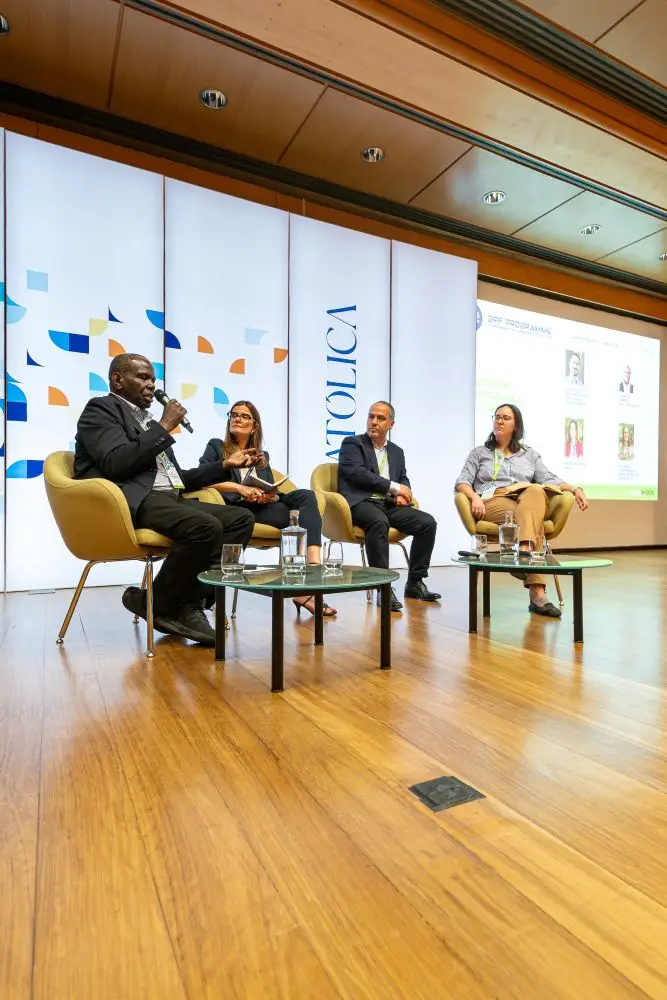
In the session “Designing Sustainable Futures”, João Cortez, Director of the Office of Research and Innovation at the Universidade Católica, moderated a debate with Ana Casaca from GALP, Rachael Fahrenbach from Oregon State University and Josphat Igadwa Mwasiagi from Moi University, in which the role of universities in creating solutions for a more sustainable future was analysed.
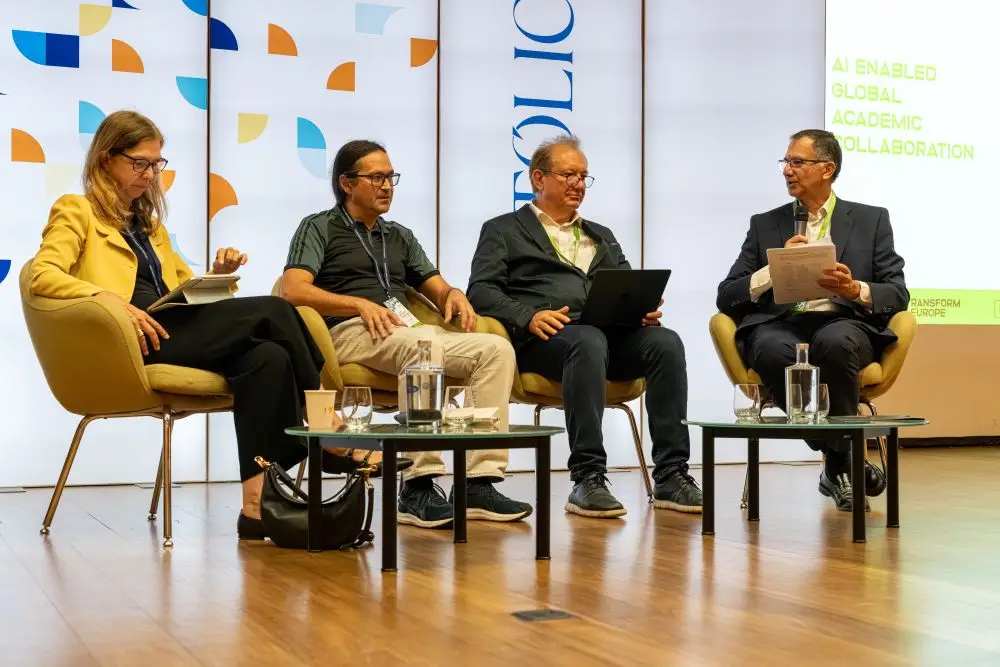
This was followed by the debate “AI Enabled Global Academic Collaboration”, moderated by Luís Barreto Xavier, a lecturer at the Universidade Católica, with participants Ana Paiva from the University of Lisbon, João Esteves from Critical TechWorks and Vesselin Popovski from OP Jindal University. This focused on the impact of artificial intelligence on international academic cooperation.
The day concluded with the session “Knowledge as the Unlocker to Growth in a Changing World”, with Francisco Mendes-Palma, Director and Coordinator of the Transform4Europe project at the Universidade Católica, leading a discussion between Veronica Frisancho, from the Banco Desarrollo A. Latina Y Caribe, and Gustavo Curcio, from São Paulo University, on knowledge as a driver of global development.